The Colonial Hurricane of 1635 along the Coast of Maine
June 17, 2026 - 7pm
Bath Freight Shed
Neill De Paoli, PhD, Manager of Colonial Pemaquid State Historic Site
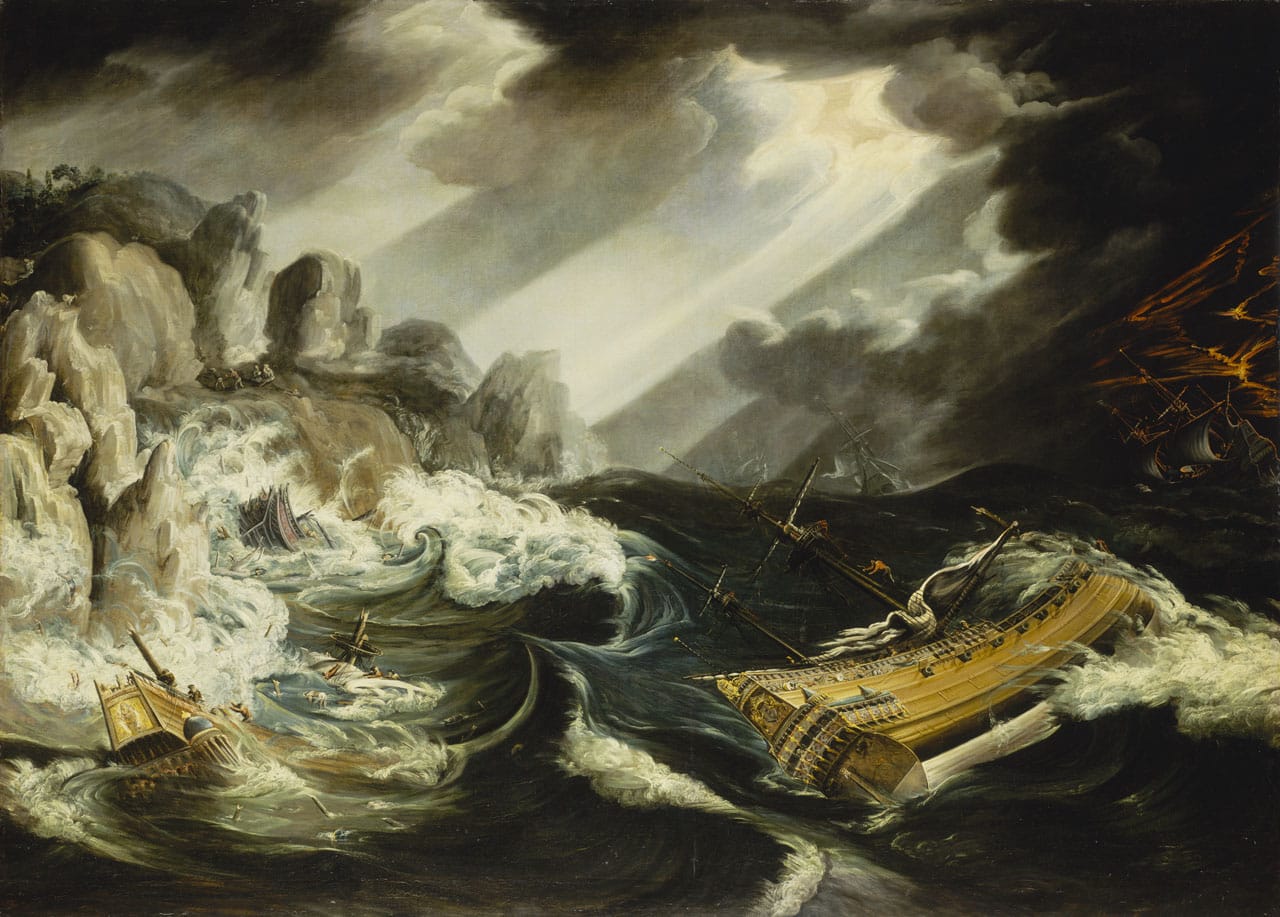
he Wreck of the Amsterdam by ornelis Claesz van Wieringen
The Great Colonial Hurricane of 1635 was a devastating Category 3 storm that hit New England in late August, destroying settlements, forests, and ships, and causing significant loss of life. Records from colonists and results from archeological studies suggest it was the most powerful storm in recorded history along the east coast of North America.
This is the third lecture of eight in the 2026 Summer Lecture Series. The lectures will be held on Wednesday evenings at the Bath Freight Shed (27 Commercial St, Bath Maine). The recording will be available below and on YouTube shortly after the lecture.
The lectures are free, but if you consider them valuable, please donate to Maine’s First Ship in person or online.
Neill De Paoli is a historian/historical archaeologist living with his wife in Kittery, Maine. He earned a Ph.D. in history from the University of New Hampshire. Since 2016, he has been Historic Site Manager at Colonial Pemaquid State Historic Site on Maine’s south-central coast. This National Historic Landmark has prehistoric roots reaching back more than 6,000 years and historic prominence as one of New England’s earliest fishing and trading settlements.
Over the last forty years, De Paoli has been studying English settlement and Anglo-Indian and English-French relations in early northern New England. Two of his most recent articles, East Meets West: Early Pemaquid’s Maine’s Link with Africa and Colonial Pemaquid, appeared in Harriet Price and Gerald E. Talbot’s Maine’s Visible Black History: The First Chronicle of Its People (2006) and Frank McManamon et als, Archaeology in America: An Encyclopedia (2008). Dr. De Paoli is currently working on two articles. The first explores the career of John Gyles, one of New England’s most prominent interpreters during the first half of the 1700s. The second examines the experiences of Maine’s Wabanaki who summered on the state’s mid-coast to sell native craft items and perform songs and dances.